


Let’s continue with the idea of setting up better boundaries to help you with work-life balance/integration.
You know you need boundaries (information). You might even have a framework or process for where you can set boundaries (organization).
The next step is support.
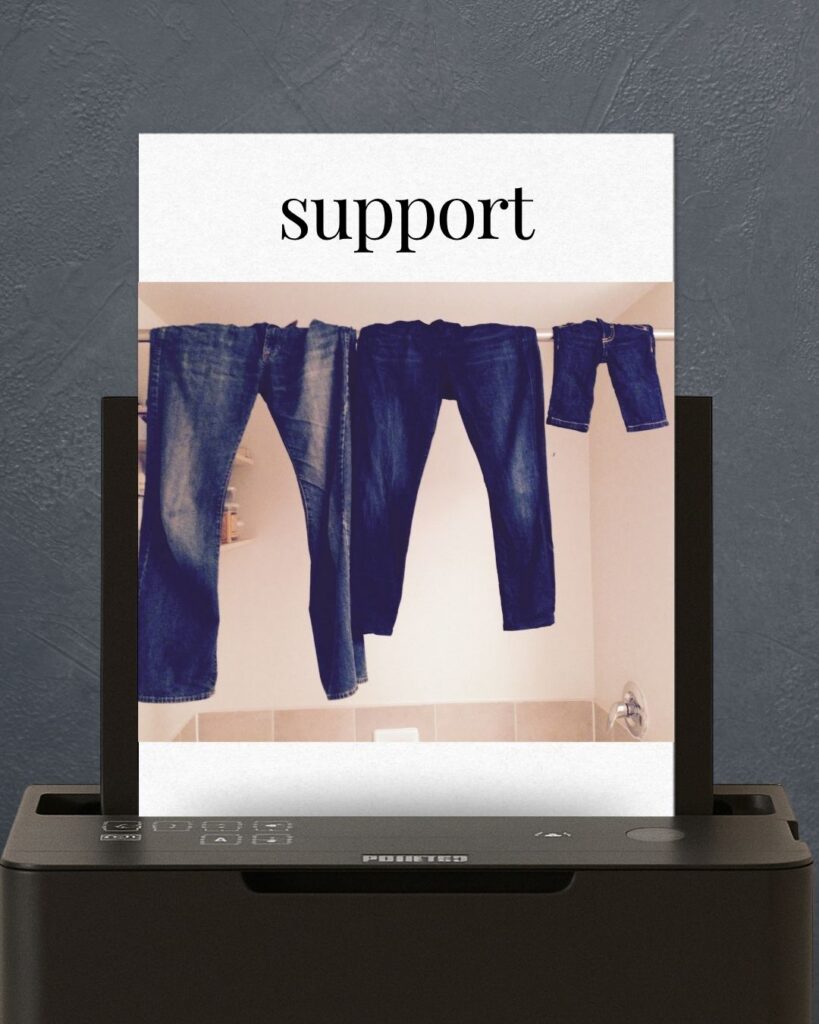
Here are two ideas to help support your habit of setting up boundaries to keep you safe.
1. Know yourself to know what you value.
When you feel wronged, but you can’t quite figure out why, it’s very likely that one of your core values is being crossed. On a high level, how you live your life should align with what you value. When you don’t feel as if you’re living your life right, it’s time for some deeper reflections on your core values.
There are a number of ways to figure out your core values, but one way I like is to think of polarizing experiences in your life (either really positive or really negative).
If you really enjoyed an experience, what value was it expressing? How were you being exactly as you were meant to be without even trying? What was so natural about the experience that it just felt right?
Then, think of the opposite case. When have you found yourself in a situation you really disliked, or a relationship that wasn’t right for you, or a job that you would rather pay to leave than get paid a million dollars–what value was being crossed? What value were you unable to express? How was the experience going against who you are deep down?
Your boundaries have to respect your core values. Support the building of new boundaries by referring to your core values.
2. Understand the root cause for why you let your boundaries to be overstepped.
You might be able to logically understand why you need boundaries and still let others overstep them.
Why?
This is an important question that requires reflection. You need to understand why, if you want a good chance of the boundaries actually sticking.
For instance, let’s assume that you’re the type of person who feels guilty if you disappoint someone else.
You might prefer to disappoint yourself than let someone else feel let down by something you did. And you know what? When you start implementing boundaries, other people are not going to be pleased! If you’re a people-pleaser, this will feel very uncomfortable!
I cannot tell you “just be okay with other people being disappointed.” You need to understand the root.
What’s underlying the need to meet other people’s needs before your own?
Why is it uncomfortable not to feel liked?
Do you have a need to be seen as the “dependable one”? Or perhaps that was a role you needed to adopt early on in life?
Do you get a thrill by being “the fixer”?
Do you feel people love you more when you’re “the strong one?”
The problem solver?
The good friend?
The one who is always prepared with the wet naps and hand sanitizer? (I see you).
Once you know the need, ask yourself whether it still feels like a healthy role for you or if you’ve perhaps taken it a bit too far. Because we all know that going too far in one direction can actually start harming you.
Get to the root of that need, and it will help you see why certain boundaries need to be in place. There is less chance of wavering.
Boundaries are kind of like salt. You need enough salt to make a dish come alive (read, for you to thrive and feel life is vibrant). Too little salt, and the dish is bland (you’re a doormat). The flavours are not enhanced. Too much salt, and the dish is inedible (you’re rigid, not able to seize opportunities or grow).
Question: “If you think of your core values, what is one boundary you know you need to respect?”
