


The other day, I was chatting with a female emergency medicine colleague about sleep. She mentioned that she hadn’t slept well in nearly a decade despite diligently adhering to all the sleep hygiene tips and taking HRT for peri-menopause-related sleep disturbances. Sleep can be challenging, especially if you have kids and work irregular hours. If you add peri-menopause, sleep can feel downright elusive.
My friend had already done the following
ensured her kids slept well with a solid routine
snoring pillows for her husband
limiting screen time 2 hours before bedtime
limiting caffeine after 12 pm
taking a warm shower as part of her wind-down routine
keeping the bedroom dark and cool without electronics or bright lights
wearing a sleep mask
and trying melatonin
Yet she still couldn’t sleep well. Her mind just wouldn’t turn off.
And this was when I shared the tip that really helped me: I dealt with my worries during the daytime.
If you are in the habit of functioning and getting things done during the day, but don’t routinely address your worries and stressors, it will be very hard to turn off your brain at night when all is quiet. There is nothing distracting you from confronting your worries when all is dark and quiet.
In their book, “Burnout: The Secret to Unlocking the Stress Cycle,” Emily Nagoski PhD and Amelia Nagoski DMA talk about the need to complete the stress cycle in order to manage the residual stress response in your body.
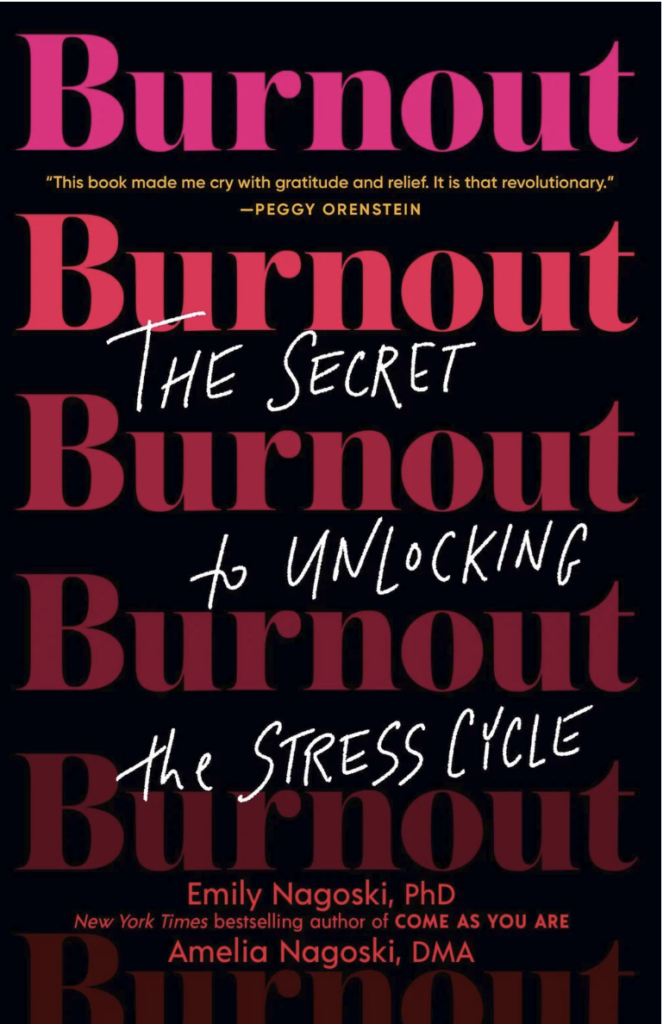
The top ways they suggest to complete the stress cycle include:
physical activity
mindful breathing
positive social interactions
a pee-in-your pants laugh
affection e.g. a 20 second hug with someone you love and trust
a good crying session
creative expression
My favourite way to complete the stress cycle is to write in my journal. I journal in the morning and I journal before I go to sleep. I write about all the things that have worried me, things that went well during the day, and my priority for the next day. I know when I close my notebook that there is a place for my worries–it’s on the page. But I can deal with it tomorrow after a good night’s sleep.
Question: “What’s your favourite way to complete the stress cycle?”
