


[Spoiler Alert for Season One of the Pitt ahead]
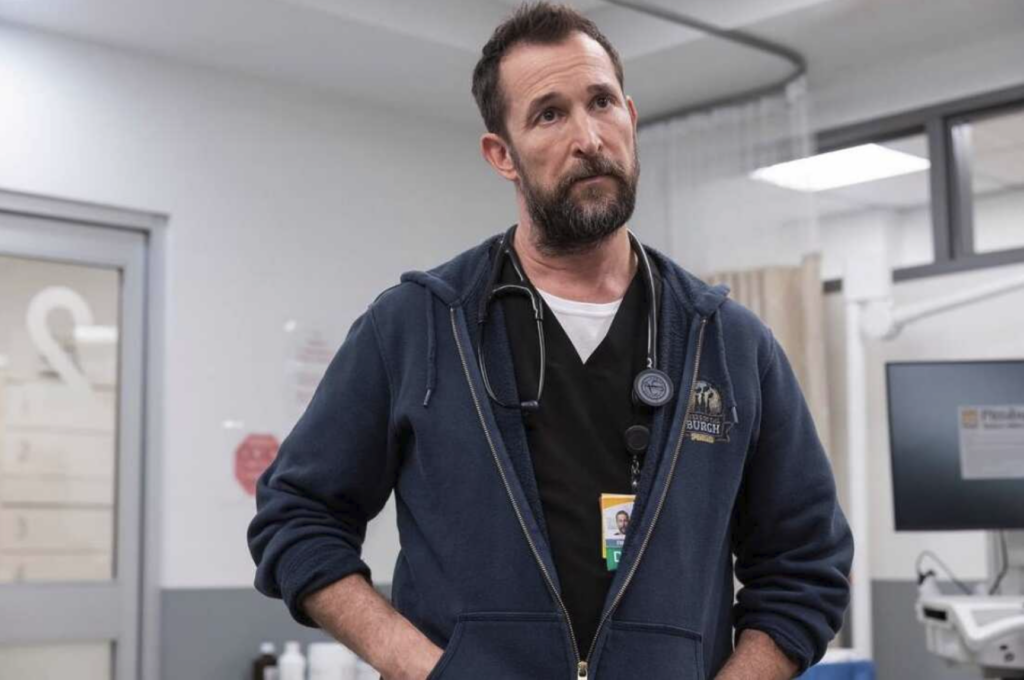
At the beginning of the series, Dr. Robby, the show’s crusty staff emergency doc, starts his shift by talking his colleague Dr. Jack Abbot off the ledge–literally off the ledge of the hospital roof top!
With a wary humour, both men hint at the extreme burnout and PTSD they feel as staff doctors in this fictitious Pittsburgh hospital.
No hugs.
No tears.
Not even a back slap!
It’s two men trying to repress their emotions, so they can get on with the job they need to get done. They need to clear the backlog of increasingly impatient patients and the shift is just starting!
Robby tells his colleague that to jump on his watch “is just not cool.” Jack quips back that he would hate to be Robby’s patient.
And with that, the show can start to reveal Robby’s backstory through one rare Zebra CME case at a time. With each prickly layer, his protective mechanisms start to break down…
One horrifying flashback in the pediatric room
One more argument with the administrative leader about paying nurses properly and moving patients upstairs
A rat gone rogue
One massively held-back pee break (it did cross my mind–is that really Noah Wyle peeing for the camera?!)
And one lost life at a time…
What does Robby represent for doctors that is so relatable?
Sure, he is dealing with an underfunded system.
Sure, he needs to balance teaching with mentorship and managing the flow of a busy emergency department.
Sure, he’s smart and capable.
He keeps on showing up and caring and managing.
You even get glimpses of his complicated love life through brief and awkward conversations with the people he loves.
I’ve written a lot about how the gendered shame trigger for women is to be able to effortlessly juggle all the tasks of work and personal life while still looking great. It’s why women always ask me about work-life balance.
So what is Robby’s shame trigger?
He’s a middle-aged, Caucasian, emergency doctor. The cowboy specialty. The frontline.
And that means he views pain and sadness as things he needs to hide away. He works on the death anniversary of his revered mentor–to do otherwise seems like an admission of weakness.
And this is why I think Robby is so relatable. He is clearly suffering. He is clearly stressed–just look at his forehead creases! The fact that he doesn’t want to confront his feelings is very telling. We know that by the age of about 7 or 8, boys are already taught that emotions are for women and girls.
Don’t cry.
Be an alpha male.
Don’t accept that stupid consult!
If you don’t know the answer, just wing it.
Robby wants to be the strong one. And to ask for help is a sign of weakness. To appear weak is shameful. Better to block out the world and the day’s pain with a set of ear pods, a cold beer, and a favourite soundtrack.
Society has an expectation of how men show up. Medicine has an expectation of how men show up.
And it’s slowly breaking men down.
Question: “How many of you have men in your life who can relate to Robby?”
